
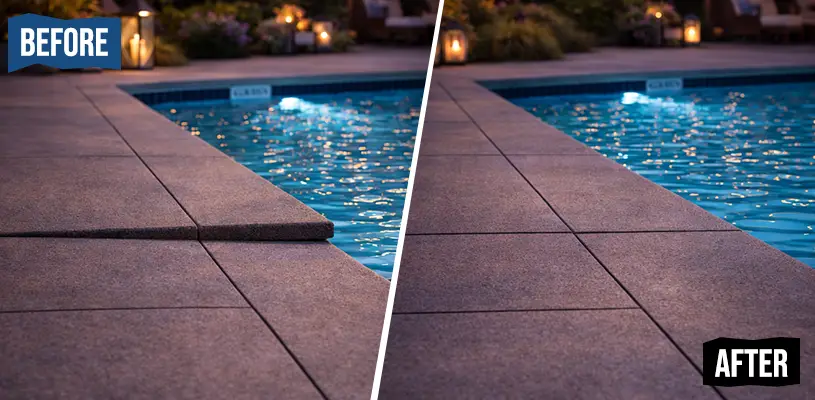
 A sinking pool deck can make you nervous about more than the concrete. There’s the raised edge that catches bare feet. The puddle that forms near the steps. And the question of whether repairing the deck could damage the pool itself.
Do you need to tear out the concrete, or can it be lifted safely?
Mudjacking and polyurethane foam lifting can both be suitable options for raising settled pool deck slabs. The right approach depends on the concrete’s condition, what caused it to sink, and how the deck connects to the surrounding pool features.
Here’s what St. Louis homeowners should know before scheduling a repair.
Why Does Concrete Around a Pool Sink?
Concrete needs solid support underneath it. When the ground settles or supporting material washes away, the slab above it can drop.
Pool decks can be especially prone to settlement because installing a pool involves digging and backfilling around the structure. That fill may settle over time, leaving gaps beneath the concrete.
Water can also contribute to the problem. Leaking plumbing, poor drainage, and water entering open joints can affect the material supporting the deck.
In St. Louis, seasonal moisture changes and freezing weather can add to movement around outdoor concrete.
Signs of settlement include uneven joints, low spots that hold water, and sections that have dropped near the pool edge. Before lifting begins, the contractor should evaluate why the concrete moved and whether another repair is needed.
How Does Mudjacking Repair a Pool Deck?
Mudjacking uses a cement-based slurry to fill spaces beneath settled concrete and raise the slab. The mixture commonly contains water, cement, and sand or other mineral material.
The crew drills access holes through the affected section, then pumps the mixture beneath it. As material is placed, the contractor monitors the slab and controls the lift. The holes are patched after the work is complete.
For concrete that remains in repairable condition, pool deck leveling with mudjacking can restore support and reduce uneven transitions without removing the existing slabs.
The repair should follow a plan for that specific deck. The contractor needs to consider the amount of settlement, the slab’s condition, and any nearby pool components that could be affected by movement.
How Does Polyurethane Foam Lifting Work?
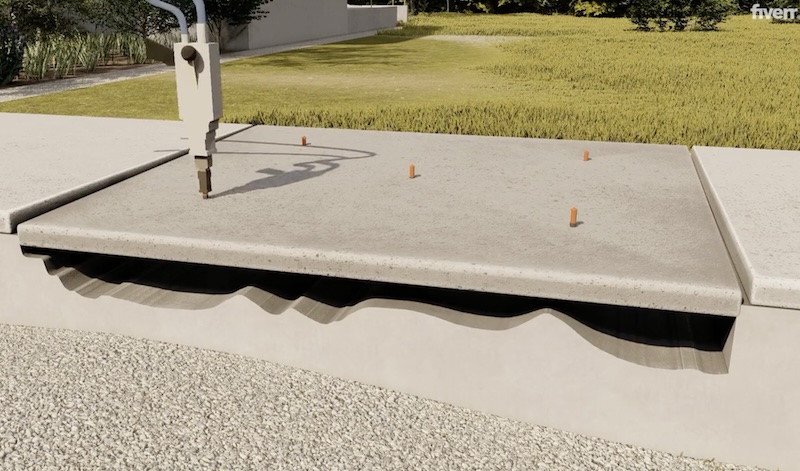 Polyurethane foam lifting, also called polyjacking, uses expanding foam beneath the slab.
The contractor drills injection holes through the concrete and introduces the material below it. As the foam expands, it fills space and can raise the settled section. The crew watches the movement throughout the process and patches the holes afterward.
Like mudjacking, polyurethane foam pool deck lifting focuses on supporting and raising existing concrete. It can be an option for suitable slabs that have dropped because of lost support underneath.
Both methods require careful material placement and controlled lifting. A contractor should explain why the proposed approach fits your deck and what results you can reasonably expect.
Can Lifting the Deck Damage the Pool?
Pool deck lifting requires extra care because the work happens beside structures and connections that should remain in place.
Pool walls, coping, skimmers, and plumbing all need attention during the evaluation. Coping is the finished edge around the top of the pool. How the concrete meets that edge can influence the repair plan.
Before work begins, tell the contractor about:
- Known plumbing leaks or unexplained water loss.
- Previous pool or deck repairs.
- Loose coping or damaged pool edges.
- Water features and lines near the affected concrete.
- Any planned pool renovation work.
Ask how the crew will monitor movement and protect nearby features. Depending on the pool’s condition, a pool professional may need to be involved.
Also ask about the required water level. Do not drain the pool in preparation unless the professionals handling the project instruct you to do so.
Are the Materials Safe Around Pool Water?
The contractor should explain which lifting material will be used and what precautions apply during installation.
Mudjacking mixtures and polyurethane products vary. Ask for information about the specific material, including curing requirements and when the area can reopen.
The repair plan should include protecting the pool water from debris, managing the work area, and cleaning up afterward. Children and pets should stay away from equipment, hoses, and unfinished work until the crew gives the all-clear.
A useful question is: “What do we need to do before, during, and after the repair?”
You should receive practical instructions that apply to your project.
Will Leveling Remove Trip Hazards and Puddles?
Raising settled concrete can reduce the height difference between neighboring slabs. That creates a more even walking surface and can reduce tripping hazards around the pool.
Drainage needs a separate review. A pool deck should have a planned slope toward suitable drainage areas. “Leveling” does not mean making the entire deck perfectly flat.
If a sunken section collects water, lifting may improve that low spot. However, surrounding slabs, fixed pool features, and drain locations can limit the adjustment.
Ask where water will go after the repair. Also remember that lifting does not erase cracks, restore worn finishes, or correct a slippery surface. Those concerns may require additional work.
When Is Pool Deck Lifting a Good Option?
Lifting is worth considering when the concrete has settled but remains sound enough to move as a section.
A deck with badly crumbling concrete or slabs broken into unstable pieces may need partial or full replacement. An active leak or pool structural problem may also need attention before concrete lifting proceeds.
During the estimate, ask which sections can be repaired, what unevenness may remain, and whether joint sealing or drainage work is included.
Discuss visible patch marks and warranty terms as well. Clear expectations help you understand what the repair will accomplish.
Repairing a Sunken Pool Deck in St. Louis
Uneven pool deck concrete does not automatically require demolition. Mudjacking and polyurethane foam lifting both offer ways to raise suitable slabs and restore support beneath them.
The first step is an evaluation of the concrete, nearby pool features, and the cause of settlement. From there, you can review the proposed repair and decide how to move forward.
If you have sinking slabs or uneven edges around your pool, explore our St. Louis pool deck leveling services and request an evaluation. Or if you need concrete lifting in Springfield, call Elevated Concrete Lifting: https://elevatedconcretelifting.com